
Collaboration

You can’t buy our battery.
You can build a business on it.
Three licences. One technology. Your market.
HPB does not manufacture batteries — we license the technology to companies that do. Depending on the role you want to play, that means the right to manufacture HPB Solid-State Batteries, to sell them in your own market, or to integrate our solid-state electrolyte into your own battery programmes. What you receive is a technology that is ready for the factory floor, together with the process know-how to put it to work.
We keep developing the technology. You build the business on it.
Our licensing model
Get access to HPB Technology through licensing
HPB’s business model is built on collaboration, not competition. Rather than producing batteries ourselves, we put the technology into the hands of companies that are already strong where it counts — in manufacturing, in their market, or in their own cell development. Licensees complement one another: what one produces, another can sell.
Our technology has patent coverage in 96 countries, giving every HPB Licensee a clear and secure framework to build on.
Which licence fits depends on what you bring. HPB offers three categories:
- Market licence
Grants you exclusive* rights to sell and distribute HPB Technology within your region and field of application, creating a protected market position for you.
* Exclusivity applies to the region and field of application defined in the individual license agreement. Exceptions apply in certain countries and in fields of application that cannot be delimited geographically.- Manufacturing licence
- Grants you rights to manufacture HPB Solid-State Batteries locally, with the advantage of reduced warranty risks and higher production reliability through better cell characteristics.
- Provides you access to HPB’s proven solid-state chemistry, know-how, and process expertise to accelerate industrialisation.
- Offers you opportunity to supply HPB Licensees and build a local customer base for HPB Technology based products.
- Component licence
• Grants you rights to integrate HPB’s Solid-State Electrolyte into your own battery development programmes.
• Provides you access to HPB’s validated electrolyte technology to enhance safety, performance, and low-temperature capability in automotive applications.
• Offers you opportunity to differentiate your battery system by using a proven solid-state electrolyte as a component without adopting HPB’s full cell architecture.
Every HPB Licensee receives the documentation, support and rights its licence covers, together with continuing access to our research and innovation updates. Manufacturing and component licensees additionally receive the process know-how to industrialise the technology.
Understanding the model
- Do I need all three licences, or can I choose one?
You choose. The three licences describe three different roles in the value chain — selling, manufacturing, and integrating — and they can be held separately or in combination. Which combination fits depends on your market, your production capabilities, and the business you intend to build. We define the scope together before any agreement is drafted.
- Can a market licensee source cells from a manufacturing licensee?
Yes. That is how the network is designed to work. A manufacturing licensee produces Solid-State Batteries based on HPB Technology locally and can supply other licensees; a market licensee can build a business without operating a plant. Our model is built on collaboration, not competition — licensees complement each other rather than compete for the same customers.
- What exactly does “exclusive” mean — and where does it not apply?
Exclusivity applies to the region and the field of application defined in your individual market licence agreement. Within that scope, you hold the sole right to sell and distribute HPB Technology. There are two exceptions: we do not grant exclusive market rights in specific countries, such as China, and in fields of application that cannot be delimited geographically — shipping, for example, where vessels operate worldwide — exclusivity is defined differently. We set this out transparently before any agreement is signed.
- Is my region still available?
Regions and fields of application are allocated as agreements are concluded, so availability changes over time. We check the current status for your specific market in the first conversation — before either side invests further effort.
- What does a licensee actually receive?
A production licensee receives access to a validated technology platform, together with what is needed to put it to work: technical documentation, process know-how, support during industrialisation, and continuing access to our research results. You are not buying a battery. You are gaining the ability to build one. A component licensee receives access to the know-how how to produce the HPB Solid-State Electrolyte within a battery cell.
Becoming a licensee
- How does the process work, from first contact to a signed agreement?
In four steps. You contact our licensing team; we conclude a mutual non-disclosure agreement; we assess technological and strategic fit on both sides, including your production environment, your target market, and your financing; finally, we define the scope of your licence and conclude the agreement. Each step is a decision point for both parties.
- How long does it take to reach series production?
From project start to series production, roughly 24 months is a realistic planning horizon, depending on shipping times. We have established an eco-system of experienced partners to assist your production set-up. Another decisive advantage of our technology: We do not have to reinvent the wheel for manufacturing, because our HPB Solid-State Batteries rely on similar production technologies to the one already used to manufacture conventional lithium-ion batteries with liquid electrolytes.
- What if we have no battery manufacturing experience yet?
For a manufacturing licence manufacturing experience matters, but it does not have to be battery-specific. What we look for is a company that can industrialise a process reliably: proven production infrastructure, working quality systems, and the engineering depth to run them. If that describes you, the conversation is worth having. For a market license you don’t need to have battery manufacturing experience at all depending on your go-to-market approach. You can order your quantities from HPB Manufacturing Licensees or sign offtake agreements with HPB.
- Do you work with investors or financial partners?
Financing of production or go-to-market is the task of our licensees. We stick to our role as technology developer. Our licensing team works with companies that intend to sell, manufacture, or integrate the technology.
Production and ecosystem
- Do we need to build an entirely new type of plant?
You will need a new production line, but not a new kind of process. The HPB Solid-State Electrolyte forms in situ, inside the cell, during production. The production is based on similar production technologies as already used to manufacture conventional lithium-ion batteries with liquid electrolytes. This means our HPB Solid-State Battery can be scaled up without reinventing the wheel for manufacturing processes. That does not, however, mean that the technology can be added to an existing line: several process steps differ and the machinery has to be adapted, so a dedicated new production line is required – one that our experienced European partners can support you with. The scale of the investment depends on your target capacity output.
- Which equipment partners are involved, and how do they support a licensee?
We work with an ecosystem of experienced European machinery and plant engineering companies, alongside technology and recycling partners. For a licensee, this means the production line is not a research project: the process steps are known to established suppliers who can plan, build, and commission them. We are happy to introduce the relevant partners to you.
- Where does the electrolyte come from — do we produce it ourselves?
The HPB Solid-State Electrolyte forms in situ, inside the cell, during the production process. Based on the basic ingredients you will be able to produce the HPB Solid-State Electrolyte yourself. The details are part of the know-how transferred under licence.
- Who is responsible for certification and recycling?
As the manufacturer placing a product on the market, the licensee holds certification and recycling responsibility for its cells and systems. On sustainability, we go one step further than European regulations require: our licensees are obliged to carry out a life cycle assessment for each battery cell. Within our European eco-system of preferred partners we are happy to introduce the relevant partners to you.
Intellectual property and responsibility
- How is the technology protected — and what happens in countries that are not covered?
HPB Technology is protected in 96 countries worldwide. Crucially, the HPB Solid-State Electrolyte is protected as a substance, not only as a production method — an alternative route to the same material does not circumvent the protection. Your licence agreement defines the territory in which your rights apply. Countries in which HPB Technology is not IP protected are free to be adressed by everyone.
- Who is responsible for the products a licensee sells?
Licensees are independent companies. They manufacture and sell under their own name, on their own account, and under their own responsibility. HPB develops and licenses the technology, sets the quality standards attached to it, and supports its licensees — but HPB does not manufacture or sell batteries, and does not assume responsibility for the business conduct of its licensees.
“Our licensing model empowers licensees to localise solid-state production while maintaining global quality standards. It’s how we turn innovation into industrial reality.”
— Sebastian Heinz, CEO, HPB
Partnering for quality and expertise
Become an HPB Licensee
HPB collaborates only with potential licensees who share our commitment to technological excellence, safety, and sustainability. Each collaboration begins with a detailed evaluation to ensure alignment and long-term success.
Typical HPB Licensee Requirements:
- Proven experience in battery or manufacturing technologies
- Robust production infrastructure and quality systems
- Commitment to sustainability and safety standards
- Strategic alignment with HPB’s long-term goals
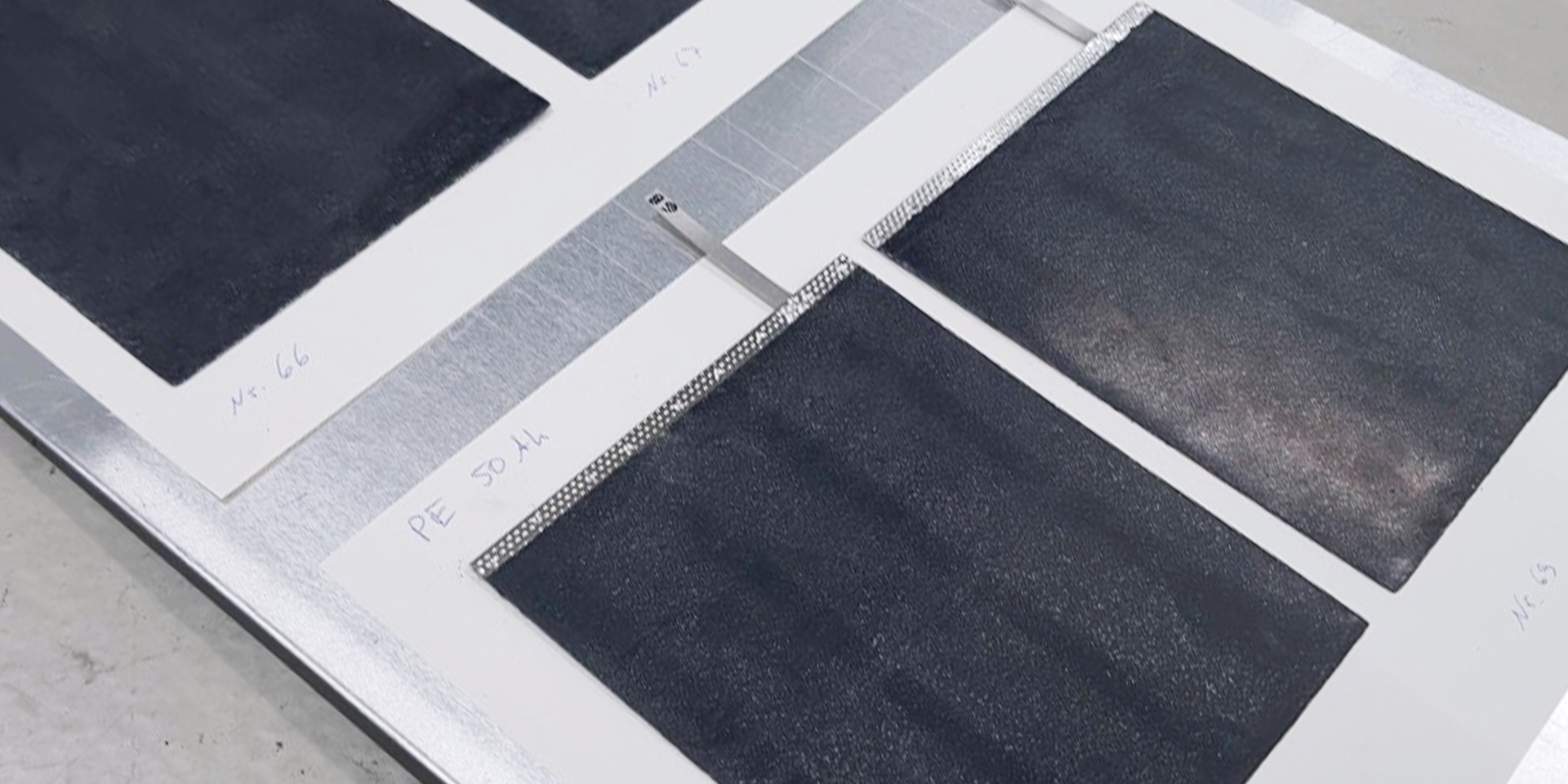
Co-developing the battery production ecosystem
Stronger together
Alongside our licence network, HPB works with selected technology partners across materials, machinery and equipment engineering, production infrastructure, sustainability, and process innovation. Current collaborations include:
Machine Partners
Technology Partners
Recycling Partner
Join HPB’s partner network
Are you a machine builder, equipment engineer, materials supplier, research institution or recycling specialist? We are always interested in partners who strengthen the ecosystem around HPB Technology — including capabilities our network does not yet cover.